
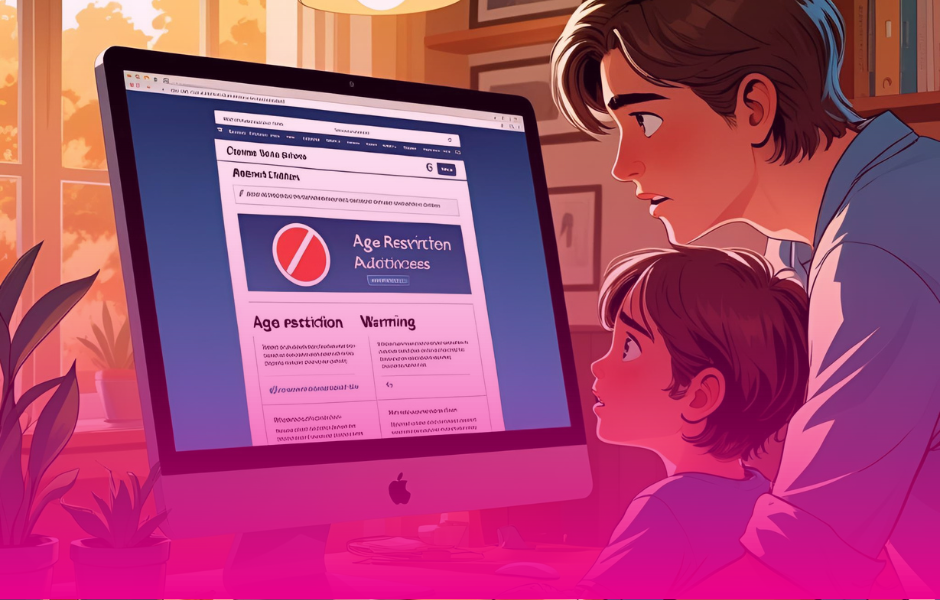

As of 25 July 2025, the UK officially began enforcing strict age verification for all online pornography and other “harmful” content, under the Online Safety Act 2023. This replaces the old tick‑box “I’m over 18” method. Ofcom now requires robust checks—ID upload, facial recognition or bank/credit card checks—to ensure users are truly adults.
This shift is dramatic. About 6,000 adult sites are expected to comply straight away. Failure to comply could bring Ofcom fines up to £18 million or 10% of global turnover, and even site‑blocking in the UK.
The aim is to protect children. Ofcom reports around 8% of children aged 8–14 visited an online porn site in a month, which highlights the need for more effective safeguards.
Why Age Verification was Introduced
For years the UK debated age checks. Initial legislation came via the 2017 Digital Economy Act, but it stalled and was eventually scrapped in 2019 amid privacy and feasibility concerns.
When the Online Safety Act 2023 passed, it replaced the old framework. Age verification re‑entered the agenda, with stricter rules rolled out in mid‑2025. It now covers not only pornography, but also content around self‑harm, eating disorders, suicide and violence, across sites including Reddit, Bluesky, X and Discord.
Officials stress the law is about child protection, not censorship. UK regulators say providers must also respect data privacy and uphold GDPR standards when implementing checks.
Likely Effects on Adult‑Site Traffic
The new rules are already reshaping usage patterns. Since enforcement began, VPN downloads in the UK have surged by 500%–2,500%, as users try to access content from outside the UK without verification.
Sites that cannot afford compliance may simply block access to UK users, or even shut down entirely—notably smaller platforms like BitChute and Lemmy have already announced UK restrictions.
Some tech‑savvy minors may still bypass restrictions using VPNs or the Tor browser. At the same time, ethical hackers have shown that some verification systems can be bypassed within seconds, raising questions about their real efficacy.
So while accidental exposure for younger users could drop, overall compliance costs may push some sites to leave the UK market—or redirect efforts toward anonymous or encrypted platforms.
Impact on the Wider Online Industry
These changes extend far beyond adult sites. Social networks, dating apps and messaging platforms are now subject to the rules if they host sensitive content. Reddit, Bluesky, Grindr and Discord have put in place verification to restrict access or content behind adult checks.
Businesses now face a high compliance bar. They must design age‑assurance workflows that minimise privacy risk, provide secure storage, follow GDPR, and resist user attempts to bypass. The Age Verification Providers Association has grown fast as services ramp up to comply.
Meanwhile, digital rights groups warn there may be privacy trade‑offs. Critics say the approach could create new surveillance risks, data breaches, or unintended censorship if implemented poorly.
Politicians are also divided. Labour stands firm that it protects children, whilst Reform UK voiced concern over free speech and digital rights, arguing it drives users towards the dark web.
What Lies Ahead
In the coming months, we might see:
- Greater adoption of privacy-preserving verification services (e.g. Yoti or Persona tokens).
- Growth of VPN or geo‑avoidance techniques, unless browsers or platforms develop stronger geolocation or anti‑VPN detection.
- Smaller and niche platforms evaluating whether it’s worth serving UK users at all—or if they should simply geo‑block.
- Ongoing tension between effective protection of minors and digital freedom, privacy and anonymity.
For the UK tech industry, this is a reset. It forces site owners to build safer systems. But it also opens debates around data responsibility, regulatory burden, and the true effectiveness of such age‑checks. The industry will need to evolve fast.
It is clear that the UK’s new rules mark a major shift. They aim to keep children safe, but they also raise fresh challenges for user privacy, industry compliance and traffic. For UK-based sites and platforms, adapting now is essential. The future digital landscape may hinge on how well these systems balance protection with respect for privacy and freedom online.